Proof vs Uncirculated Quality for Modern US Commemorative Silver Dollars
Most of the coins use silver metal, often being 90 percent silver or very pure silver, holding value just because of the metal content. Every coin series comes in two main types — Proof and Uncirculated quality.
The technical difference between these two qualities is clear but very important, strongly changing the coin's price on the market, showing how collectors see the quality level. But for those who cannot yet determine the quality of the coin by eye, coin-identifier.com will be a great start for the development of visual checking experience.
The final selling price often goes far past the metal value, reflecting the care and work put into making the coin.
Details of Proof Quality
Proof coins show the highest making quality the U.S. Mint can give to the public, needing much time and special, slow work. The making process is long and careful, differing a lot from regular coin production methods.
Proof Minting Process
The silver coin pieces are first chosen with great care, polishing them many times before hitting the coin, ensuring the coin's flat space is perfectly smooth and shiny like a mirror. This polishing step takes much time, adding to the total cost.
The tools used to put the picture on the coin are also made shiny like a mirror, giving a clean background.
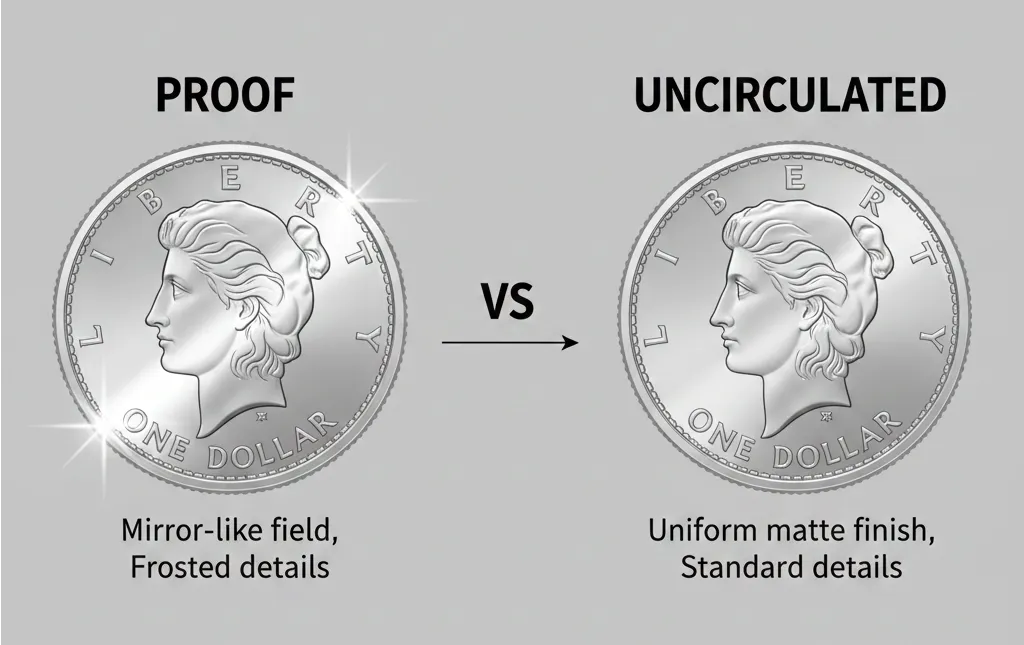
However, the picture parts, such as faces or letters, are treated chemically or with a sand-like process, giving them a flat, non-shiny, or 'frosty' look. The frosty look helps the picture stand out clearly.
The Proof coin gets hit not once, but two or more times, using a special, very precise press, making sure all the small design parts and the frosty picture are fully and clearly placed onto the metal. The slow, multiple hits push the metal completely into the die, ensuring perfect detail.
The main feature is the 'cameo' effect, where the flat part around the picture is very smooth and shiny, reflecting light well, acting like a mirror. The raised picture itself remains non-shiny, giving the coin a deep, sculptural, 3D look, making it very popular.
After making them, workers touch Proof coins only with soft gloves, holding them by hand, putting them right away into strong plastic boxes or holders, stopping any fingerprints, marks, or small scratches from appearing on the delicate mirror surface.
Details of Uncirculated Quality
Uncirculated coins are also made for people who collect, never going into general use, but the process of making them is simpler and faster, being more like the regular way coins are mass-produced.
Uncirculated Minting Process
The coin pieces for UNC coins are chosen with less strict rules than for Proof coins, not getting the same special mirror-like polish. They might be cleaned slightly, but they do not go through the intensive mirror-making process.
The dies for UNC coins are not polished to a mirror shine, having a normal, slightly rough, or textured surface. These dies make a standard coin finish across the whole surface, lacking the two-tone look.
The UNC coin usually gets hit only once, sometimes twice, using a faster machine than the Proof press, aiming for a good but not perfect level of small detail. The single, faster strike gives the coin a strong, clean look but without the deep detail of a Proof coin.
UNC coins do not have mirror flat parts or the 'cameo' effect, instead having a finish 'satiny' or 'lustrous', meaning they are shiny but not like glass. The flat and the raised parts of the UNC coin have the same kind of surface texture, reflecting light but not creating the deep, special contrast of the Proof coin.
The shine must be full and whole across the entire coin, meaning no dark spots or dull areas, showing the coin's first-made condition.
Workers also put UNC coins into safe materials, keeping them from damage, but the process of handling them is not as strict as the careful process used for the Proof coins, causing a few more small marks to be acceptable.
The UNC coin is a perfect example of what a coin looks like right after being made in the Mint, having no wear or damage from being used by people.
Main Reasons Changing the Price Difference
The difference in price between PF and UNC coins comes from three main things, naming them the cost of work,the coin's look, and the difficulty of finding a perfect coin.
Cost of Work and Making
Making a Proof coin needs much more time and hand work from the workers, increasing the base price a lot for the Mint to cover its costs.
Polishing the coin pieces, treating the dies, hitting the coin many times, and checking the coin one by one are all slow steps, making Proof coins expensive to produce but easy to determine by coin identification.
Making UNC coins is a faster process, using more machines and less hand-to-coin contact, lowering the total cost of each coin.
The Mint often has to throw away more Proof coins because of small marks on the mirror surface, raising the cost for the remaining perfect Proof coins.
What the Market Wants
Collectors historically like the Proof quality more because of its strong beauty and perfect look.
The deep mirror flat part, combined with the non-shiny picture, creates an effect the UNC coin cannot copy, making the Proof coin look much more striking and wanted by many buyers.
Proof coins are seen as the best examples of the Mint's ability, showing great skill, while UNC coins are seen as standard collector items, having a lower status in the collector's eye. This feeling among collectors is a big reason for changing the price and demand.
Difficulty in Getting the Perfect Grade
The biggest difference in price is seen in coins that expert companies have checked and given the top grade.
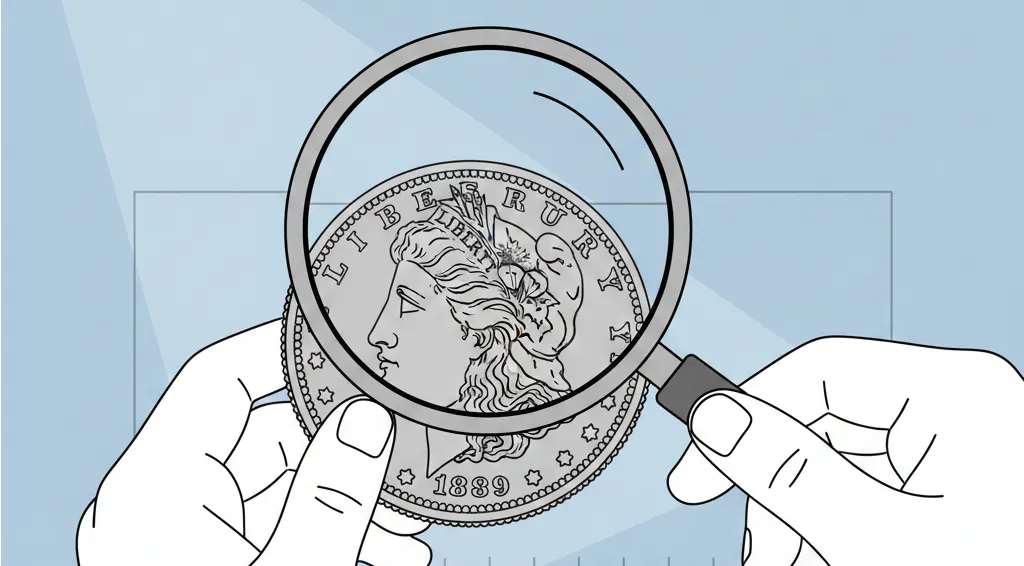
A Proof coin with a PF-70 grade is much harder to find than a UNC coin with an MS-70 grade. The shiny mirror surface of the Proof coin shows every tiny scratch or mark, making it very hard to get this perfect grade.
A UNC coin with the MS-70 grade is perfect, but the coin's satiny surface hides small marks better than a mirror, making it easier to find a coin with this top grade checked by a coin scanner.
Because of the difficulty in making and checking, a PF-70 coin often costs much more than an MS-70 coin of the same design, showing the high value collectors put on this rare perfect state.
The Factor of Total Mintage and Perfect Coins Found
When looking at the price, people must understand the difference between the total number of coins made, calling it Mintage, and the number of perfect ones found, calling it Population.
Mintage is the total number of coins the Mint makes and sells, sometimes being higher for Proof coins, showing the Mint expects them to sell well. The total Mintage number does not always tell the full story about the coin's price.
The most important factor is the Population, meaning the number of coins that expert companies have given the best possible grade, showing the coin's true rarity in perfect shape. Expert companies give reports showing how many coins of a certain year got a top grade.
True Rarity: If there are 10,000 UNC coins with grade MS-70, but only 1,000 Proof coins with grade PF-70, the PF-70 coin is clearly much rarer in perfect condition, making its price much higher, no matter the start Mintage number.
Cameo Quality
DCC/UC: Expert grading companies give these special tags to Proof coins, finding that the difference between the mirror flat part and the frosty picture is very strong and clear, making the coin look better. These special coins look better and so they cost more money, commanding a high price.
Missing Cameo: Proof coins having low grades, for example, PF-60 to PF-64, may lose their 'cameo' look because of wrong storage or time passing, strongly lowering their value for collectors, even though they are still Proof coins. The mirror surface must keep its shine for the coin to hold its value.
Conclusion
The price difference between Proof and Uncirculated modern silver dollars is a clear mirror of the extra work needed to make them and the special look collectors want.
Proof coins always cost more money than UNC coins at the same quality level, showing their higher production cost and better look.
And the final price shows the high work and the rarity of finding a coin made without any single small mistake.