Why Some Wheat Pennies Are Worth Thousands of Dollars
Being the most famous and collected coin in the history of the USA, the Lincoln cent with the image of wheat ears on the back side produced from 1909 to 1958 stays very popular.
For most people, this is just an old copper coin found in a jar with small money or in the old bag of a grandfather.
However, in the world of professional coin collecting, some of these valuable Wheat Pennies have a price similar to the cost of a luxury car or even a big house.
The question about the reason for one 1941 coin costing 5 cents and another one costing 50,000 dollars not having one simple answer, we need to look at many factors.
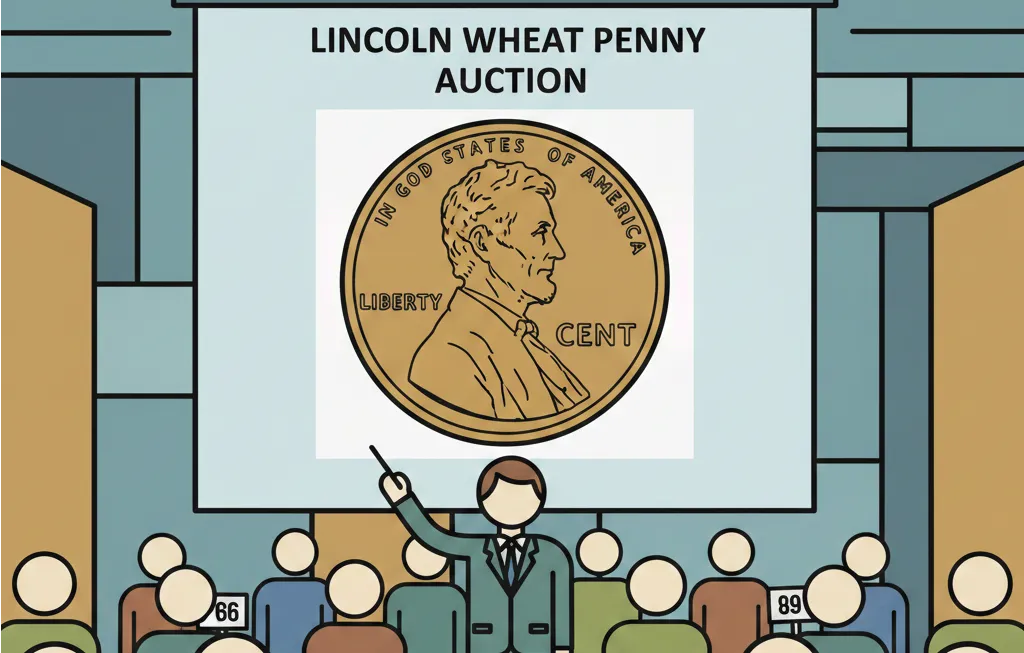
Being a complex mix of rarity, condition, historical mistakes, and market demand, this situation turns simple copper into gold.
The Factor of Condition — Grading and Its Influence
The first and most important reason for a high price being preservation, we must talk about the 70-point Sheldon scale. Having a difference between 66 and 67 points, the price can change by thousands of dollars.
The Scale of Preservation and "Mint State"
Coins never being used in shops are called MS (Mint State). For "wheat cents", the last steps of this scale are very important:
MS-63–65: These are coins with a price that is not very high.
MS-66: Being in great condition, this coin has almost no small marks.
MS-67 and higher: This is an extreme rarity.
The reason for such a high price being simple, we know that copper is a soft metal. Hitting each other in bags at the mint, coins got marks, and being in pockets, they became old. Finding a "surviving" piece from the 1910s or 1920s in a condition "like it just came from the machine" is a real miracle.
Classification by Color (RD, RB, BN)
For copper coins, the color is the main factor:
Red (RD): Having a bright, original orange-red shine, these are the most expensive.
Red-Brown (RB): Showing some oxidation and mixing red and brown colors together.
Brown (BN): Having a completely brown surface.
A 1919 coin without a mint mark in MS-68 RD condition costing more than 30,000 dollars, we see that keeping its original color after a hundred years is very important.
Great Minting Errors — Mistakes Costing a Fortune
Mint errors being the "holy grail" for treasure hunters, they appear when the machines do not work correctly.
1943 Copper Penny
This is probably the most famous mistake in history because, in 1943, all cents had to be steel due to the war. However, several copper pieces from 1942 staying inside the machines and being struck by 1943 stamps, they became very rare.
Why does it cost thousands? Only about 20–40 pieces exist in the world today.
Price: Depending on the condition, the price goes from 100,000 to 1,700,000 dollars.
1955 Doubled Die Obverse (DDO)
In 1955, the stamp hit the metal twice with a small move, creating a clear double image of the date and words. About 20,000 of these coins going into the pockets of people, they often appeared in cigarette machines.
Price: Even in a bad condition, it costs about 1,000 dollars. Being in a perfect MS-65 RD condition, the price goes above 50,000 dollars.
Rarity by Years and Mints
Some years of production having a very small number of coins made, they become "Key Dates".
1909-S VDB
Being the most legendary coin of the series, it appeared in the first year of production. The designer Victor David Brenner putting his initials (VDB) on the back side, the public felt angry about this "advertisement", so the government removed the letters. The Mint in San Francisco (S) making only 484,000 of these coins, the number is very small.
Price: In a middle condition, it costs about 1,000–1,500 dollars. Having MS-67 RD condition, the price can reach 150,000 dollars.
1914-D
The production in Denver being less than 1.2 million pieces, most of these coins were used very actively. Finding a piece in high preservation being extremely difficult, collectors search for 1914-D to finish their full albums.
Proof Coins
Before 1916 and after 1936, Philadelphia made special sets for collectors called "Proof". Using polished stamps and special metal pieces, they made very beautiful coins.
The early Matte Proofs from 1909–1916 looking like pieces of art, their numbers were only hundreds or a few thousands. Today, collectors paying 20,000–40,000 dollars for a perfect Matte Proof from 1911, we see the high demand.
Market Psychology and Population Reports
The price of a coin depending not only on how many were made but also on how many "survived" in a certain grade, we must look at the best coin value app reports.
The Role of PCGS and NGC
Two main companies for grading coins keeping a record of all pieces, they show how many coins exist. Seeing a report saying that only one 1926-S coin in MS-65 RD condition exists in the world, collectors start a real war at the auction. People wanting to have the "best known" (Top Pop) item, they are ready to pay ten times more.
Finishing the Collections
Many rich people trying to collect all Wheat Pennies in all possible versions in perfect condition, they spend a lot of money. Missing one rare coin like the 1922 "No D" appearing when the mint mark was erased from the stamp, they pay huge sums for a rare piece to fill a hole in the album.
Historical Importance — More Than Just Money
The 1941 coin mentioned before costing a lot only in exceptional condition, we ask why people pay such money for "wheat cents".
These coins covering the time of two world wars, the Great Depression, and the start of the space age, they are symbols. Every "wheat" coin being a sign of American spirit and industrial growth, it stays a family treasure for many people becoming an investment tool over time.
Having a Wheat Penny, do not run to the bank immediately, but use this list:
Check the date: Searching for 1909, 1914, 1922, 1931, 1943, 1955.
Search for a letter under the date: "S" for San Francisco, "D" for Denver. Having no letter means Philadelphia.
Study the details: Using a coin finder, you should look for double letters or an unusual shine.
Magnet test: If your 1943 cent does not stick to a magnet, you maybe found a copper rarity, but being careful is important because of many fakes.
Conclusion
The high price of "wheat cents" being the result of history, art, and strict quality standards, it is very interesting. Some people seeing only small money, others find a chance for investment in these little copper discs.
Short Price Note:
Rarity by production: 1909-S VDB, 1914-S, 1931-S.
Rarity by mistake: 1943 Copper, 1955 DDO, 1922 No D.
Rarity by preservation: Any coin before 1930 having MS-66 Red condition and higher.
Thousands of dollars for a coin not being an accident, this is the price for uniqueness and perfect preservation in a world where time destroys everything. Giving a chance to have an object that no one else has, the Wheat Penny remains the king of American coins and continues to inspire new collectors searching for that "copper million".